
Last updated November 15, 2026
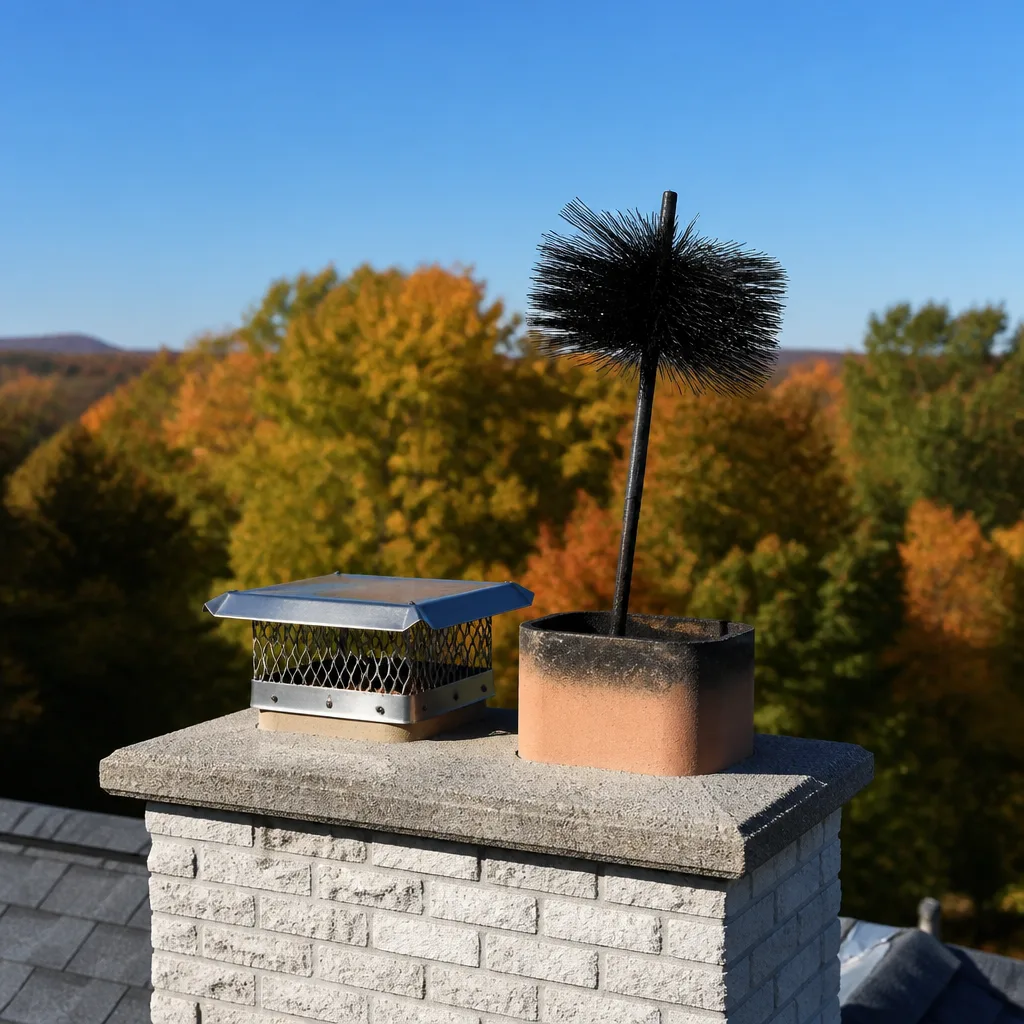 Sweep & inspection
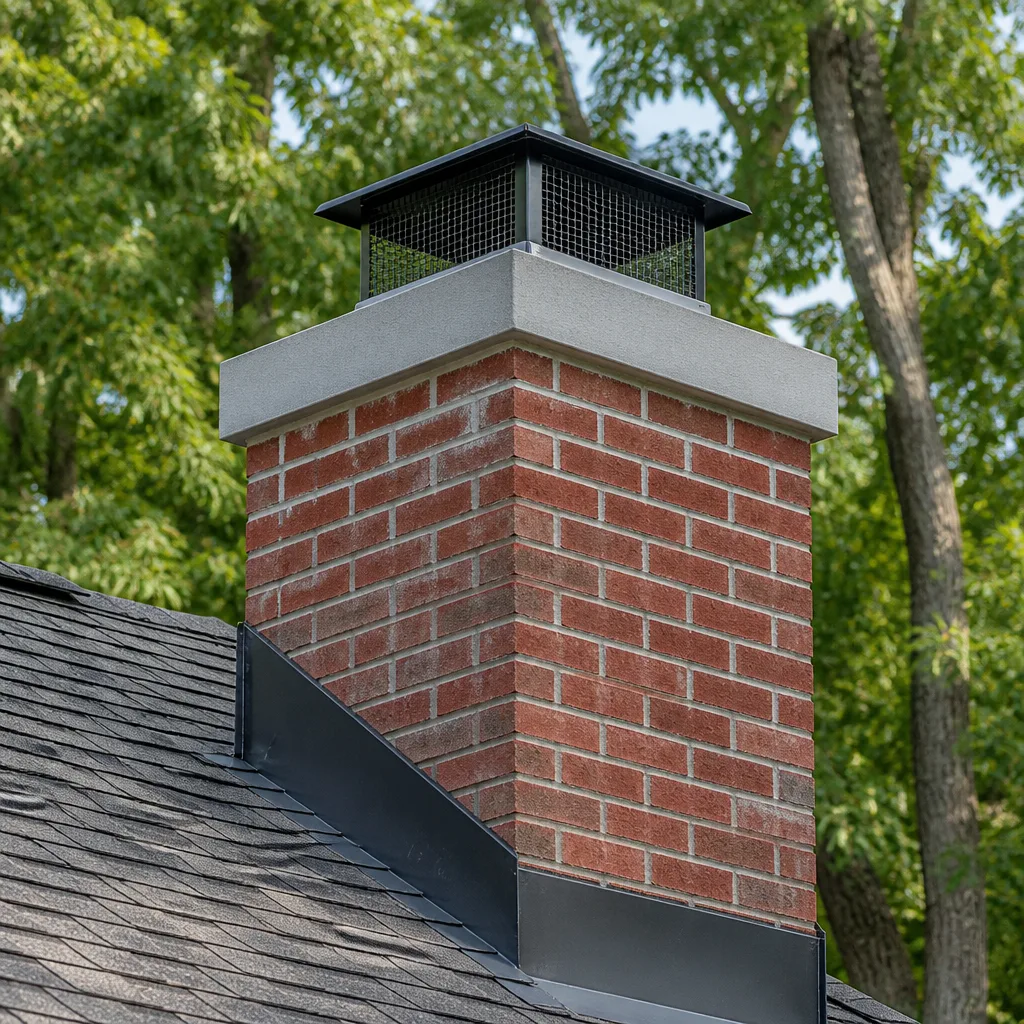 Caps & crowns
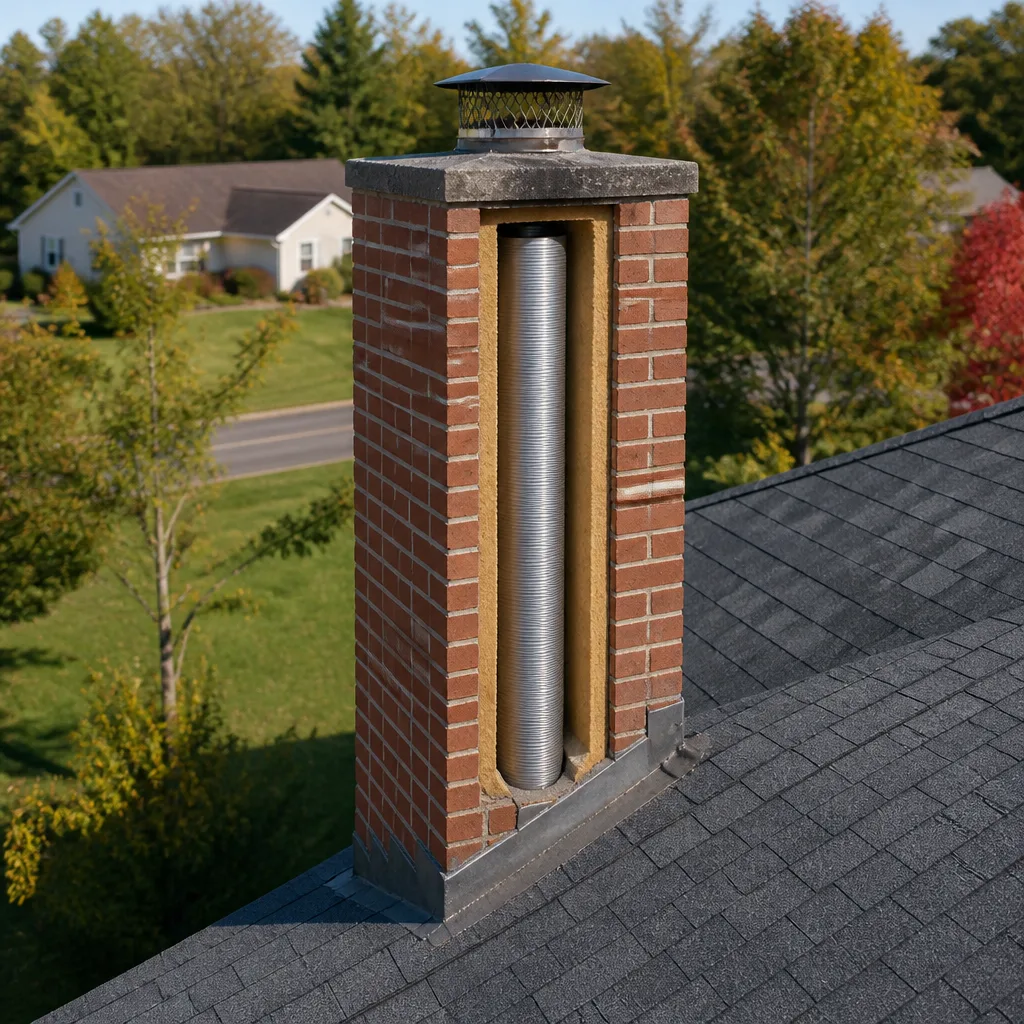 Flue relining
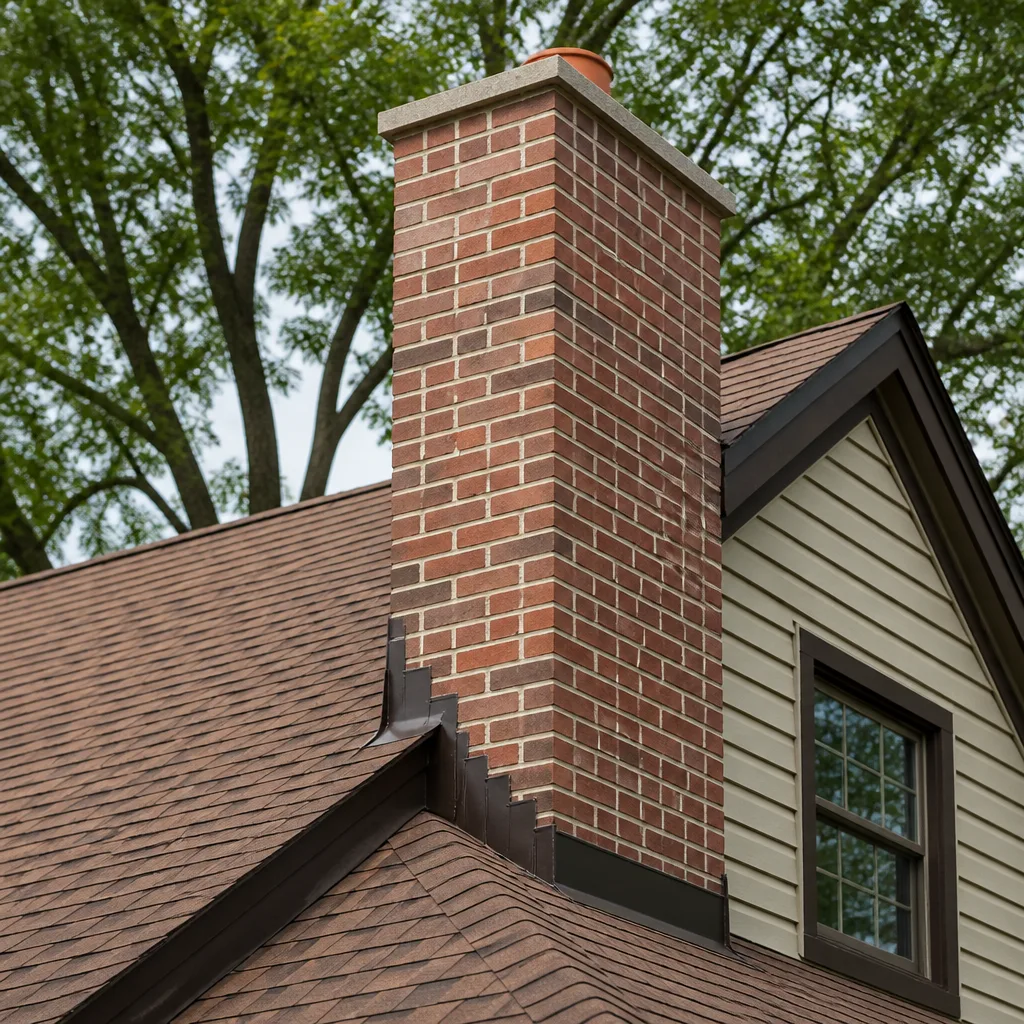 Masonry repair
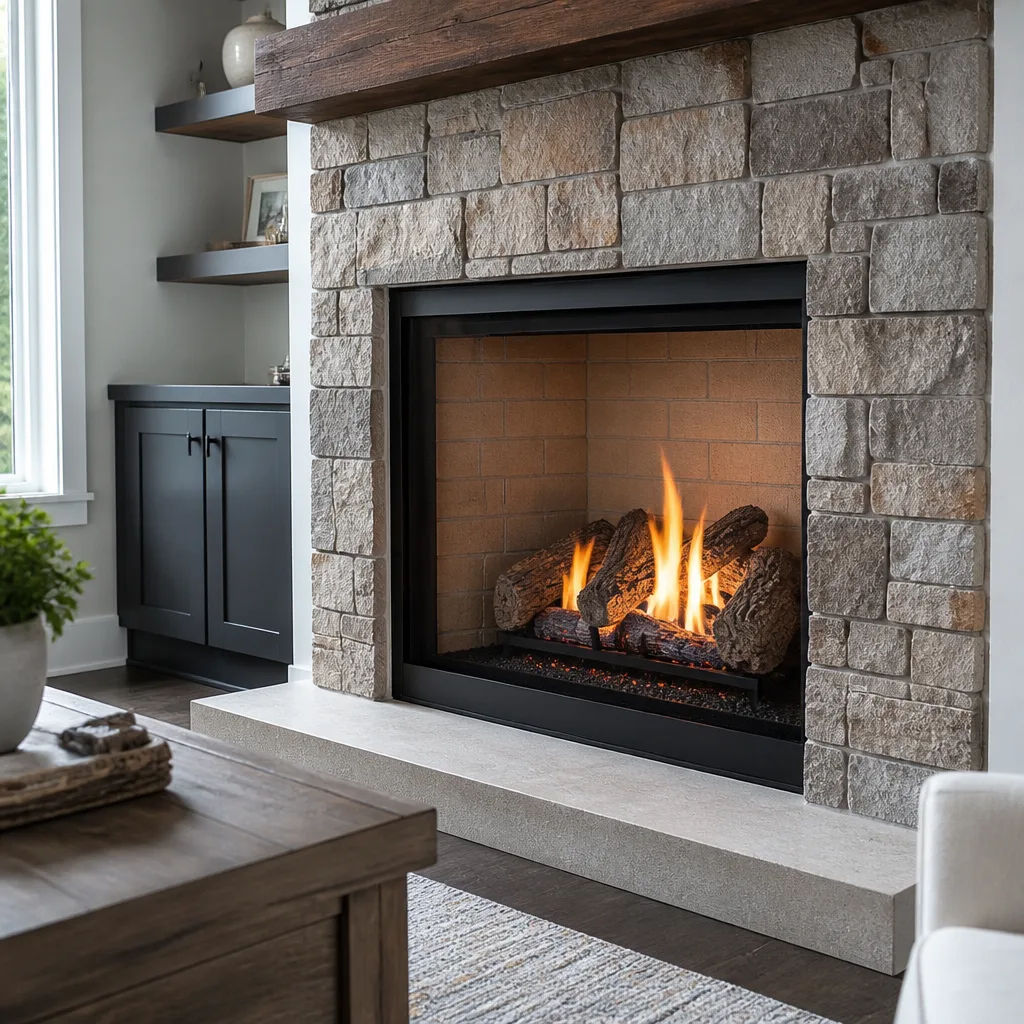 Gas fireplace service
Level 1 sweep and inspection to the NFPA 211 annual standard - flue, crown, cap, and flashing checked and photographed
Chimney sweep logs do not sweep chimneys. They loosen some creosote - which then falls where a brush and vacuum still have to collect it.
Chimney Sweep Maintenance Schedule: What to Do and When
The standard advice says sweep your chimney once a year, every year, and you’re done. That single line has caused more chimney damage than almost any other piece of home maintenance advice, because it ignores the variables that actually matter: what you burn, how much you burn, and how old your chimney system is. A homeowner burning one cord of seasoned wood a season and a homeowner burning three cords of mixed hardwood need very different schedules, yet both get the same annual reminder. In this guide, we’ll break down what a real maintenance calendar looks like for Concord homes, organized by fuel type and usage rather than a calendar flip.
Quick Answer
The real answer to “how often should a chimney be cleaned” depends on what you burn. The National Fire Protection Association recommends annual chimney inspection, but that’s a baseline for average use. Wood-burning chimneys typically need sweeping every 50 burns or so, or when creosote reaches 1/8 inch, which for most households means one to two sweeps per year based on cord volume. Gas and pellet systems need less frequent sweeping but still need an annual inspection. In Concord’s humid climate, spring (April and May) is the best window to schedule cleaning before summer moisture accelerates creosote odor and damage.
Styles & brands we work with
- Sweep & inspection
- Caps & crowns
- Flue relining
- Masonry repair
- Gas fireplace service
Table of Contents
- How Your Fuel Type Sets the Schedule
- Inspection vs. Cleaning: They’re Not the Same Thing
- Your Annual Maintenance Calendar
- Why April and May Are the Best Months for Service in Concord
- The Non-Sweep Items Most Homeowners Skip
- Bought an Older Home? Reset the Clock
- Signs You’re Already Overdue
- What a Sweep Actually Involves
How Your Fuel Type Sets the Schedule
Not all chimneys collect the same deposits. What you burn dictates how fast your flue fills up and how often you need a sweep.
Wood-burning fireplaces and stoves
Cord volume is the clearest signal. Most wood-burning households that burn two or more cords per heating season need at least one sweep midseason and one in spring. If you burn under a cord, a single spring sweep usually covers it. Creosote buildup is the real metric, though, and that depends on wood moisture and burn temperature as much as volume. Wet wood and smoldering fires create creosote faster than seasoned, hot-burning wood.
Gas fireplaces and inserts
Gas fireplaces don’t generate creosote the way wood does, but they still need an annual visual inspection. Bugs, bird nests, and moisture can block the venting just like a wood flue, and a gas appliance that’s not venting properly is a carbon monoxide concern. We inspect gas systems every year even when there’s no soot to sweep.
Pellet stoves
Pellet appliances accumulate ash at a different rate than cord wood. Fly ash is fine and travels further up the flue. Pellet venting needs inspection each year and sweeping based on ash accumulation, typically every one to two tons of pellets burned. Many pellet owners schedule a spring sweep and leave it there.
- Wood (2+ cords/year): Sweep midseason and spring, plus annual inspection
- Wood (under 1 cord/year): Sweep in spring, plus annual inspection
- Gas: Annual visual inspection, sweep as need indicates
- Pellet: Spring sweep based on tonnage, plus annual inspection
If you’re not sure which category your household falls into, a chimney sweep gives you a starting point with a camera inspection that shows exactly what’s in there.
Inspection vs. Cleaning: They’re Not the Same Thing
Here’s the split most homeowners miss: inspections should happen on a fixed schedule; cleanings should be usage-triggered. The two jobs serve different purposes and they shouldn’t be bundled into a single annual appointment that assumes both are needed.
An inspection is an assessment of condition: the flue liner, the firebox, the damper, the cap, the flashing, the crown. It’s diagnostic, not maintenance. It happens on a calendar, once a year, no matter how much you burned. The three standardized levels follow a clear hierarchy.
- Level 1 inspection: Visual check of accessible components. Standard for chimneys in regular use with no changes to the system.
- Level 2 inspection: Includes a camera scan of the flue interior. Required after a chimney fire, after any change in fuel type or appliance, upon sale or transfer of the property, or when a Level 1 turns up something concerning.
- Level 3 inspection: Involves opening up parts of the chimney or home to access concealed areas. Rare, and usually triggered by a specific diagnostic question.
A cleaning, by contrast, is scheduled by need. You clean when deposits reach a threshold that affects performance or safety, not just because a year has passed. Homeowners who clean on the calendar rather than by usage either waste money on unnecessary sweeps or, far more often, skip one when the fire was heavy and the deposits built up faster than expected. Separating the two schedules is the single biggest upgrade you can make to how you maintain a chimney in Concord.
Your Annual Maintenance Calendar
We’ve worked out a practical service calendar from the maintenance side, built around Concord’s seasonal rhythm and the actual failure points that show up in this region. It applies to most homes with a working fireplace or solid-fuel appliance.
- Early fall (September-October): Level 1 inspection before the heating season. Check the cap and spark screen for summer debris, bird nests, and loose hardware. Confirm the damper operates and the firebox is clear.
- Midseason (January): If you’re a heavy burner, schedule the midseason sweep. This is the sweep triggered by use, not the calendar, and it’s the one most homeowners skip.
- Late winter (February-March): Quick visual check of the exterior, including the flashing at the roofline where winter weather stresses the seal. If you see staining or a gap, get it inspected.
- Spring (April-May): Post-season sweep. This is the optimal service window in Concord, and we’ll explain why in the next section.
- Late spring (May-June): Crown sealant reapplication if the crown shows cracking. Crown repair is often best handled before summer heat drives moisture deeper into the masonry.
- Summer (July-August): Let the chimney rest. Check the cap once mid-summer for wasp nests and debris, and book fall service before the calendar fills.
This is the full loop. Not every home needs every item; a gas appliance with a solid venting assembly may only need steps one, two, and four. But the shape of the calendar is the same for everyone.
Why April and May Are the Best Months for Service in Concord
Spring is when a sweep pays off twice. Concord’s humid summers push moisture into masonry cracks and reactivated creosote, and the smell that develops in July usually traces back to a chimney that was never cleaned after the last fire of the season. Creosote absorbs ambient humidity and releases that sour, smoky odor throughout the house, especially on warm days when windows are open and the stack effect runs backward. Getting the flue swept in April or May closes that window before it opens.
There’s a structural reason too. Winter freeze-thaw cycles stress the crown, the flashing, and the masonry. When spring rain follows, water migrates into any crack that opened over the winter. A spring inspection catches these issues while they’re still cosmetic, before the moisture has had a summer to make them structural.
Scheduling also works better in spring. The rush of homeowners calling in October and November to prep for the first fire always strains the schedule. April and May in Concord means faster booking and a calmer service window where the technician isn’t squeezing your job between a dozen others. When we work on a chimney in Concord in spring, the diagnosis is usually clearer too, because we’re looking at a system that’s fully at rest rather than one in mid-burn.
One thing spring service doesn’t do: it doesn’t replace a midseason sweep if you’re a heavy burner. If you went through three cords last winter, you needed a sweep in January regardless of the calendar.
The Non-Sweep Items Most Homeowners Skip
A chimney is a system, not just a flue. The parts around the flue fail on their own schedule, and they’re frequently what causes a problem that looks like a sweeping issue but isn’t. Here’s what belongs on your calendar alongside the sweep.
- Crown sealant reapplication: The concrete crown at the top of the chimney cracks over time. A flexible, breathable sealant applied before the crack widens prevents water from working into the masonry below. Check the crown every spring and reapply when you see spiderweb cracks.
- Flashing check after winter: The metal flashing where the chimney meets the roof takes a beating from freeze-thaw. Lifted or rusted flashing shows up as water staining on the ceiling inside and as rust streaks on the exterior. Inspect every spring.
- Cap and screen inspection in fall: A missing or damaged cap lets rain, animals, and debris into the flue. The screen keeps sparks off the roof and stops birds from nesting. Check both in the fall before the first fire.
- Damper operation: The damper should seal when closed and open fully. A rusted or warped damper wastes heat and lets conditioned air escape up the flue when the fireplace isn’t in use.
- Liner integrity: A Level 2 camera inspection is the only way to see what’s happening inside the flue. Cracks in a clay liner open a path for carbon monoxide into the home, and the only reliable way to catch them before they cause a problem is to look.
When the crown needs work, or the cap needs replacing, we use professional-grade parts from brands like Gelco and Olympia Chimney rather than whatever fits the opening. When a liner turns out to be cracked but not collapsed, HeatShield’s ceramic resurfacing system often restores it without a full liner replacement. That’s a distinction worth knowing about before you accept a quote for a whole new liner.
Bought an Older Home? Reset the Clock
A newly purchased home has an unknown maintenance history, and that gap is where problems hide. You don’t know when the chimney was last swept, whether it’s ever been inspected at the Level 2 standard, or whether a previous owner used the fireplace at all. The seller’s disclosure won’t tell you, and the home inspector’s report typically doesn’t cover the flue interior.
The correct baseline for a newly owned home is a Level 2 inspection, not a routine sweep. A sweep cleans out what’s there; a Level 2 inspection shows what condition the system is in. That includes a camera scan of the entire flue, an assessment of the liner material and joints, a check of the firebox and damper, and an exterior evaluation of the crown, cap, and flashing.
If the Level 2 is clean, you’ve established your starting point and can move onto the normal annual calendar. If it turns up a cracked liner, missing cap, or a firebox in need of repair, you know exactly what to address before the first fire in the new home. In our experience, most older homes in Concord’s established neighborhoods turn up at least one deferred item. Sometimes it’s something simple like a missing screen. Sometimes it’s a liner that needs HeatShield restoration. Either way, the inspection is where you start, not the sweep.
This is the chimney repair side of the business that most sweep-only companies can’t help with. A sweep company that finds a problem can clean the flue, but it can’t fix the crown or replace the liner. Having inspection, repair, and sweep under one contractor means the diagnosis and the work stay with the same company.
Signs You’re Already Overdue
Chimneys rarely fail without warning. The signals show up early if you know what to look for. Any of the following means you should schedule service before the next fire.
- Strong smoke smell when the fireplace is off: Airflow can be pushing creosote odor back into the house, often a sign of heavy buildup or a blocked flue.
- Visible soot or black staining at the firebox opening: This typically means draft problems or a chimney that’s already filled past a safe level.
- Flakes of creosote falling into the firebox: Creosote that’s flaking or curling off the flue walls is in the glazed, third-stage form, the most flammable kind and the one most associated with chimney fires.
- Smoke entering the room when you light a fire: A draft reversal, blocked flue, or a firebox that’s lost its seal.
- Water staining on the ceiling or chimney exterior: Flashing or crown failure letting moisture in.
- Rust on the damper or firebox hardware: Moisture is getting where it shouldn’t.
- Any chimney fire event, however brief: A chimney fire, even one that burned itself out quickly, warrants a Level 2 inspection before you use the fireplace again.
If more than one of these is showing up, the calendar is telling you what we’d tell you anyway: schedule service before the next burn. The earlier the better, because damage compounds.
What a Sweep Actually Involves
The sweep you’ve been picturing, a guy with a brush on a pole, is only part of the job. A proper service visit includes the sweep itself, plus a look at what’s around the flue.
A typical service call starts with an assessment of the appliance and immediate firebox area. Then the flue gets brushed, with tools chosen for the liner type and the kind of deposit you have. Creosote in the glazed stage needs more than a soft brush; ash and soot come out easily by comparison. Once the flue is clean, we run a camera through to check liner condition, joints, and any hidden gaps or damage. A photo report lets you see what we saw, so you’re not taking the diagnosis on faith. Finally, the firebox, damper, and exterior components get checked and noted.
The best sweeps include the inspection because the sweep is the moment the flue is cleanest and easiest to inspect. A sweep without an inspection is just maintenance with a blind spot. If the technician can’t tell you what the liner looks like after cleaning it, the appointment isn’t finished.
Pricing is per job, set by the written estimate, so we won’t put a number here that wouldn’t apply to your system. Call for a free estimate and we’ll quote your specific fireplace and flue.
Common Mistakes to Avoid
- Treating “once a year” as a universal rule: A household burning three cords a winter and a household using the fireplace twice a month don’t need the same schedule. Usage sets the cleaning cadence, not the calendar.
- Skipping the annual inspection when there’s no cleaning to do: The inspection is what catches liner damage, flashing failure, and crown cracks before they cause leaks or carbon monoxide risk. Skipping it because the flue “looks clean” leaves your expensive chimney unwatched.
- Burning unseasoned wood to save a few dollars: Wet wood creates far more creosote than seasoned wood and needs more sensitive flues swept more often. Seasoning is cheaper than an emergency repair.
- Waiting until October to book, then accepting whoever has an opening: In Concord, October and November are the busiest service months. Scheduling in spring means you’re not choosing from the leftovers.
- Assuming a masonry chimney is self-sealing: Bricks and mortar absorb water. Without a sound crown and good flashing, a Concord chimney can take on moisture all summer and show no visible sign until the damage is interior.
- Accepting a low-cost sweep with no inspection: A sweep that skips the camera leaves the most important part of the chimney unexamined. If the price sounds unusually low, ask what’s included.
- Listening to a doctor’s diagnosis without a second camera view: If someone tells you the whole liner needs replacement, ask to see the camera footage. Nothing should be recommended that you can’t see for yourself.
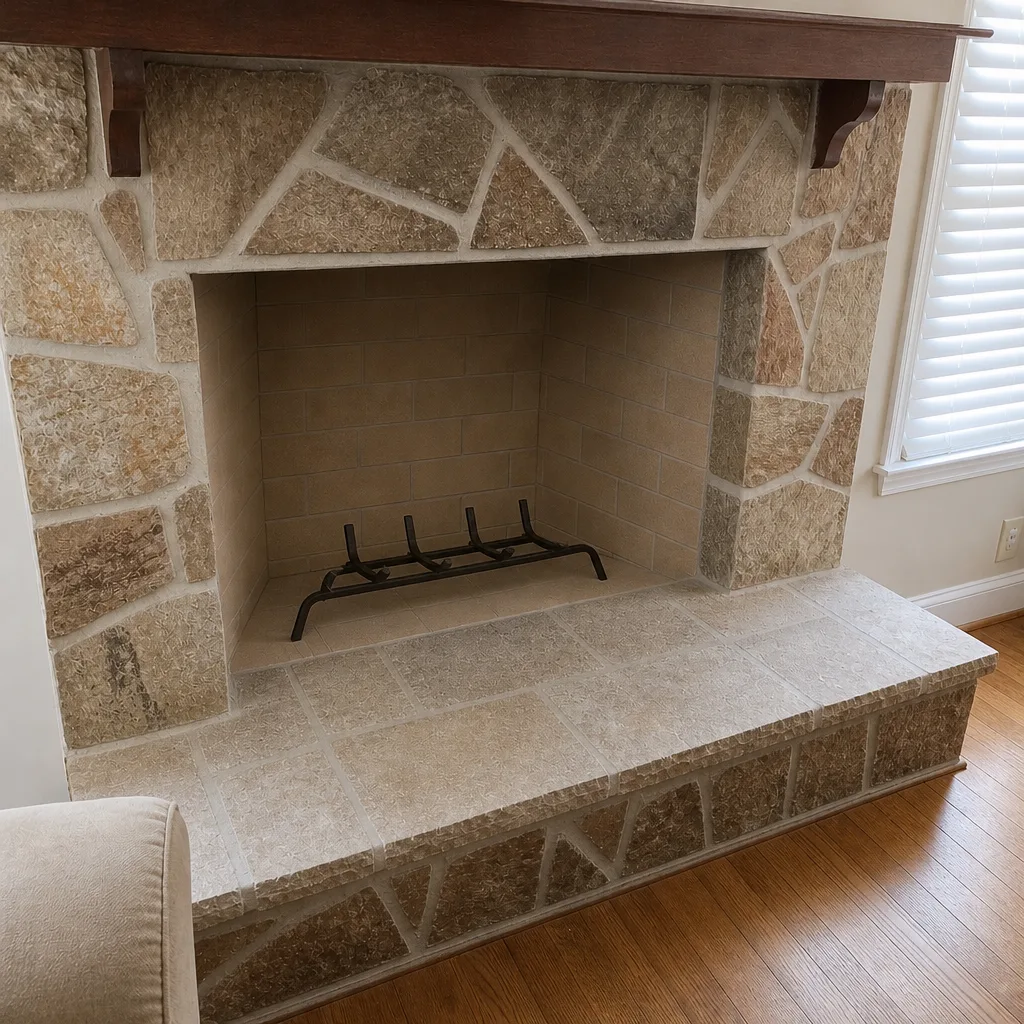
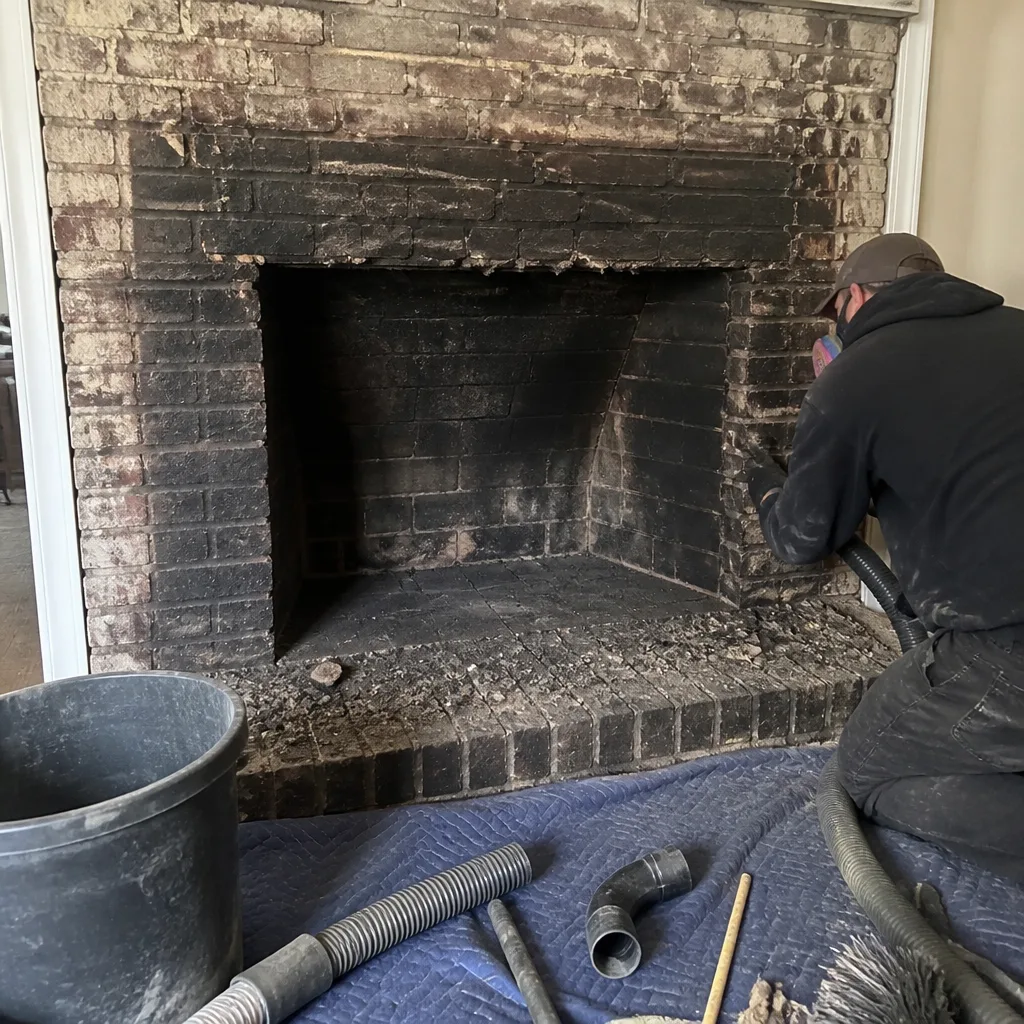
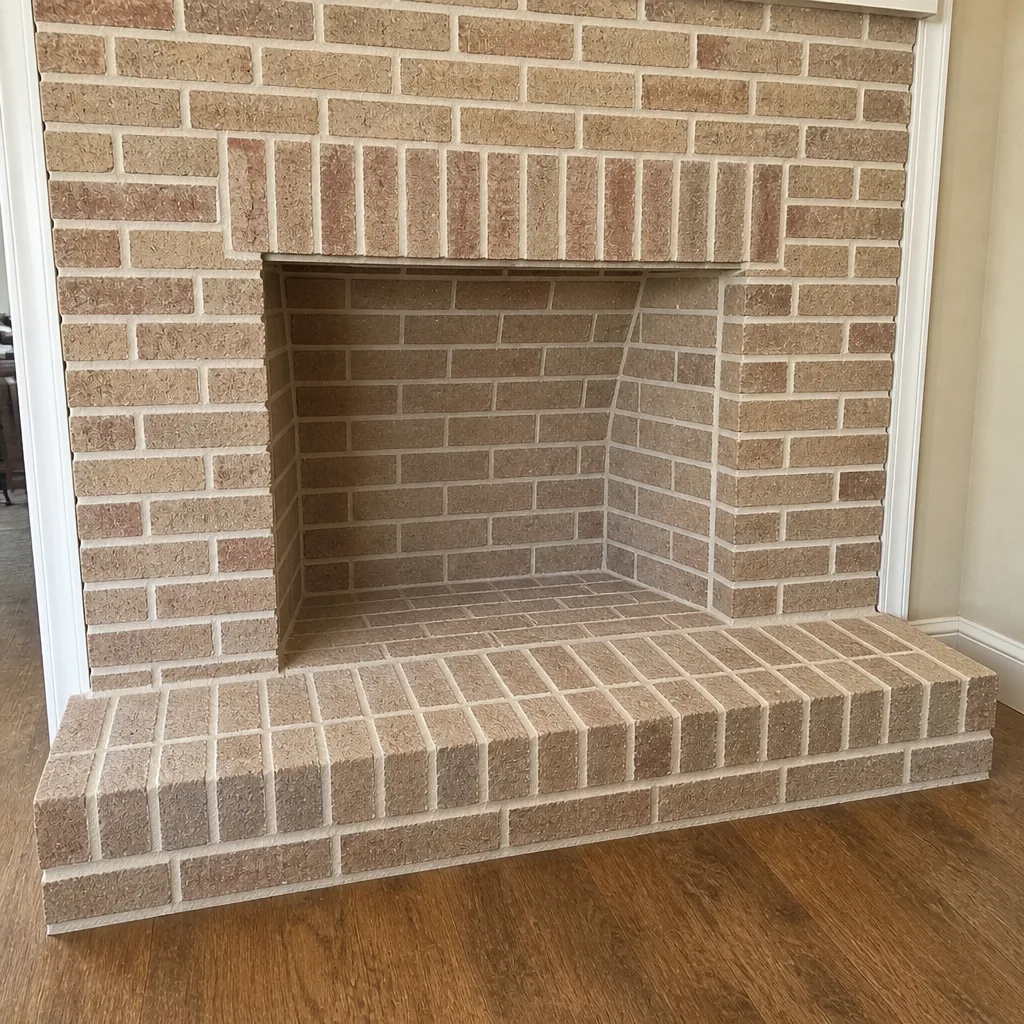
See the difference
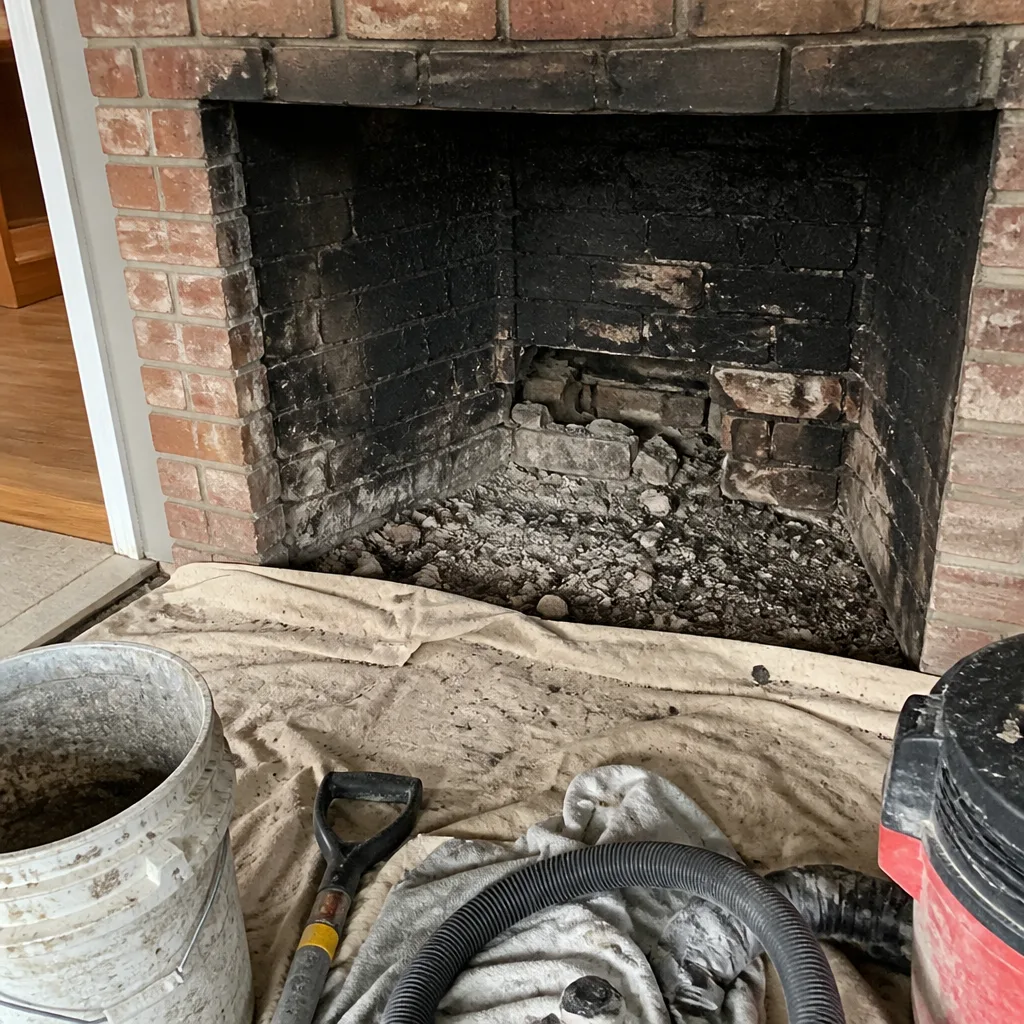 Before
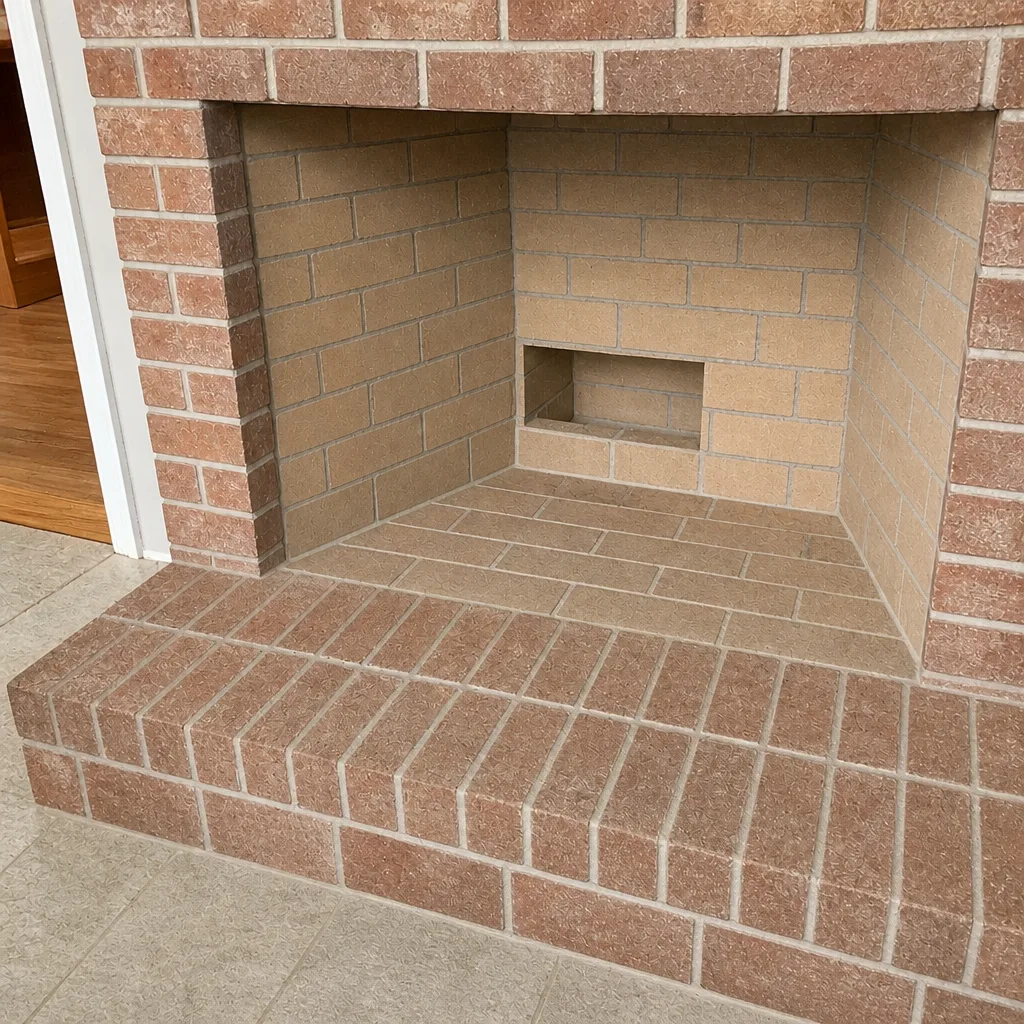 After
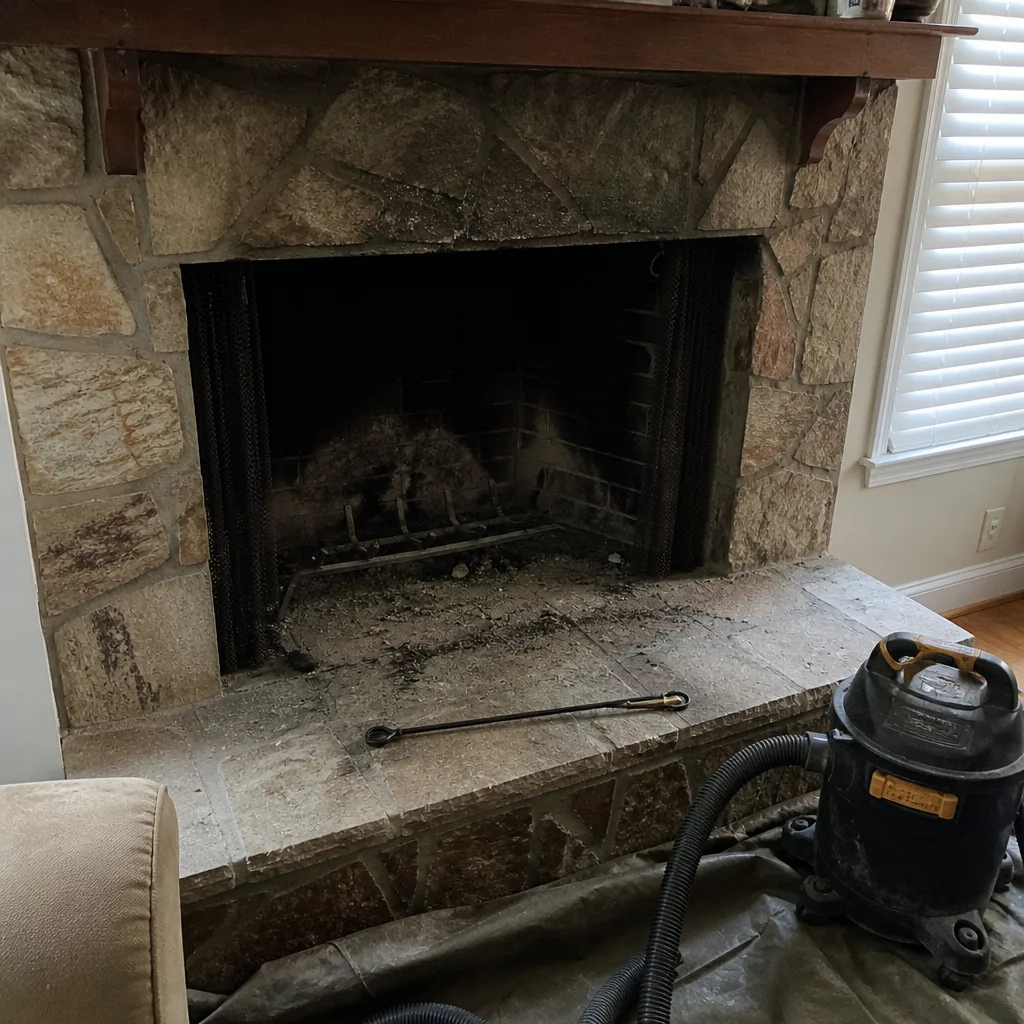 Before
 After
 Before
 After
When to Call a Professional
Schedule a professional service if you’re burning wood more than a cord a season, if you haven’t had an inspection in over a year, if you’ve bought a home without a known chimney history, or if any of the warning signs above is present. A sweep, an inspection, and a repair assessment can all be scheduled in one visit, so you don’t have to plan multiple appointments across different companies. Concord Chimney Cleaning offers free estimates in Concord. Call (866) 665-4951. We answer 24/7. Fast dispatch from 7am to 7pm, Sunday through Friday.
Frequently Asked Questions
Most wood-burning households in Concord need a sweep once or twice a year, depending on how many cords they burn. Under a cord a season means one spring sweep is usually enough; two to three cords typically needs a midseason sweep around January plus one in spring. Gas and pellet systems need annual inspection and less frequent sweeping. Call (866) 665-4951 for an exact quote based on your fuel type and usage, and estimates are free.
Yes. Sweeping removes deposits; inspection assesses condition. The flue liner, crown, flashing, and cap are all outside the sweep’s scope, and a problem in any of them won’t show up in a routine cleaning. Annual Level 1 inspection is the baseline, and a Level 2 with a camera scan is the right call after a chimney fire, a change of fuel type, or a home purchase.
Creosote builds up on the flue walls and eventually glazes into a highly flammable form. That’s the deposit associated with chimney fires, which can crack the liner and open a path for carbon monoxide and smoke into the home. Skipping the inspection is a separate risk: liner damage, flashing failure, and crown cracks all get a year longer to develop. Call (866) 665-4951 to book a sweep and inspection before the next burn.
April and May give you the widest service window before the summer humidity sets in. Creosote left in the flue through a Concord summer absorbs moisture and can push smoky odor back into the house while windows are open. Spring service also lets us inspect masonry and flashing after winter freeze-thaw stress, when cracks are easiest to catch. Call (866) 665-4951 for a spring appointment.
A Level 2 inspection is the right starting point for a new home, not a sweep. You don’t know when the chimney was last serviced or whether it’s been inspected to a camera standard, so the first job is figuring out condition before you clean. Once you have a baseline, the normal annual calendar takes over. Call (866) 665-4951 to book the inspection.
Yes. Sweep, inspection, and repair are all handled by Concord Chimney Cleaning, so a problem found during the inspection can be quoted and repaired without passing you to another contractor. We work with professional-grade products like HeatShield for liner restoration and Gelco and Olympia Chimney for caps and protection. Call (866) 665-4951 for a free repair estimate.
The Bottom Line
The annual sweep is the floor, not the plan. Your actual schedule depends on what you burn, how much of it, and how old the chimney is. Wood burners on two-plus cords need midseason plus spring; lighter users can go with a spring sweep alone; gas and pellet systems need annual inspection most of all. Inspections happen on the calendar, cleanings happen on the trigger. In Concord, spring is the optimal service window for every part of the job. If your fireplace has been sitting since last winter without a look, or you’ve never had the flue camera-inspected, now is the time to schedule. Reach out for a Concord Chimney Cleaning estimate and we’ll build the calendar around your actual usage, not a generic one-size reminder.
Concord Chimney Cleaning is a full-service chimney company serving Concord and surrounding communities. Our technicians have up to 10 years of experience and work with professional-grade systems, including HeatShield, DuraFlex, Gelco, Olympia Chimney, Famco, and Copperfield product lines. Call (866) 665-4951 for a free estimate. We answer 24/7. Fast dispatch from 7am to 7pm, Sunday through Friday.
Written by the team at Concord Chimney Cleaning.