
Last updated November 15, 2026
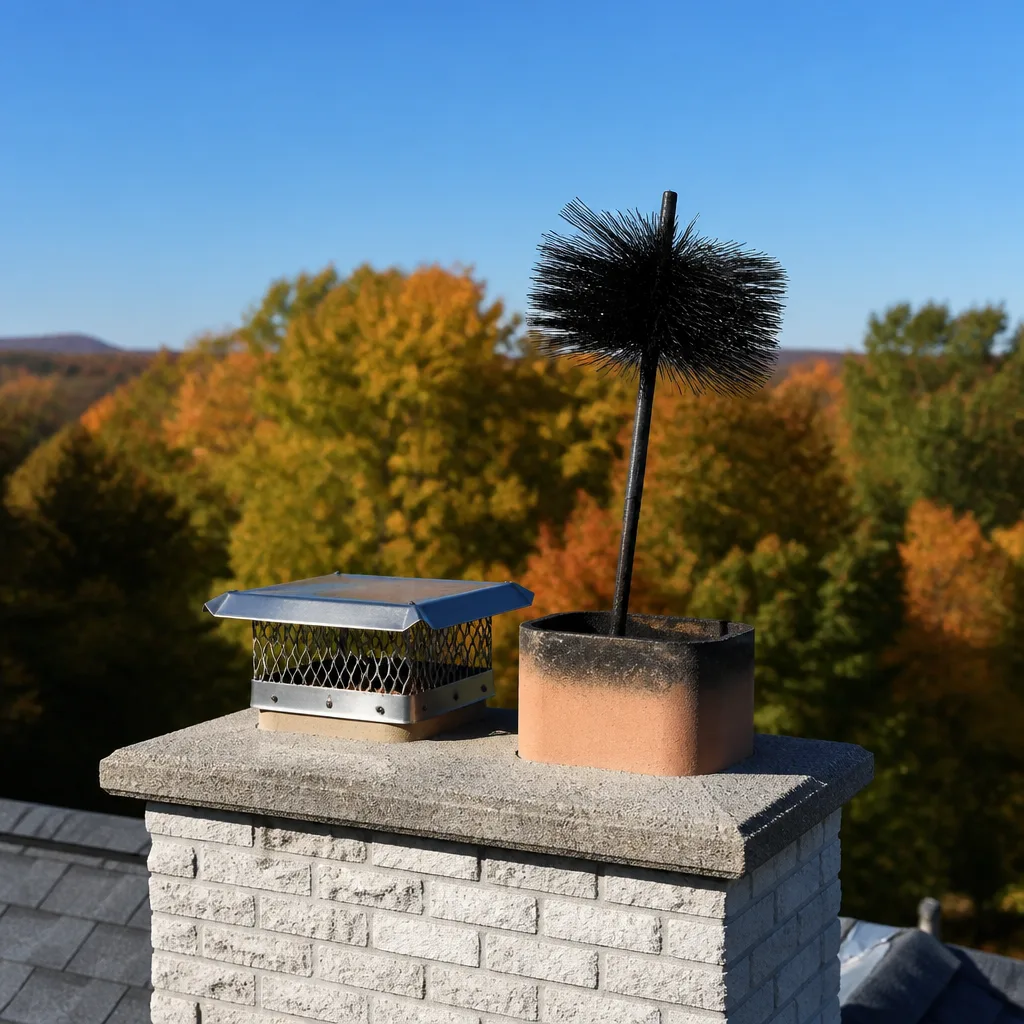 Sweep & inspection
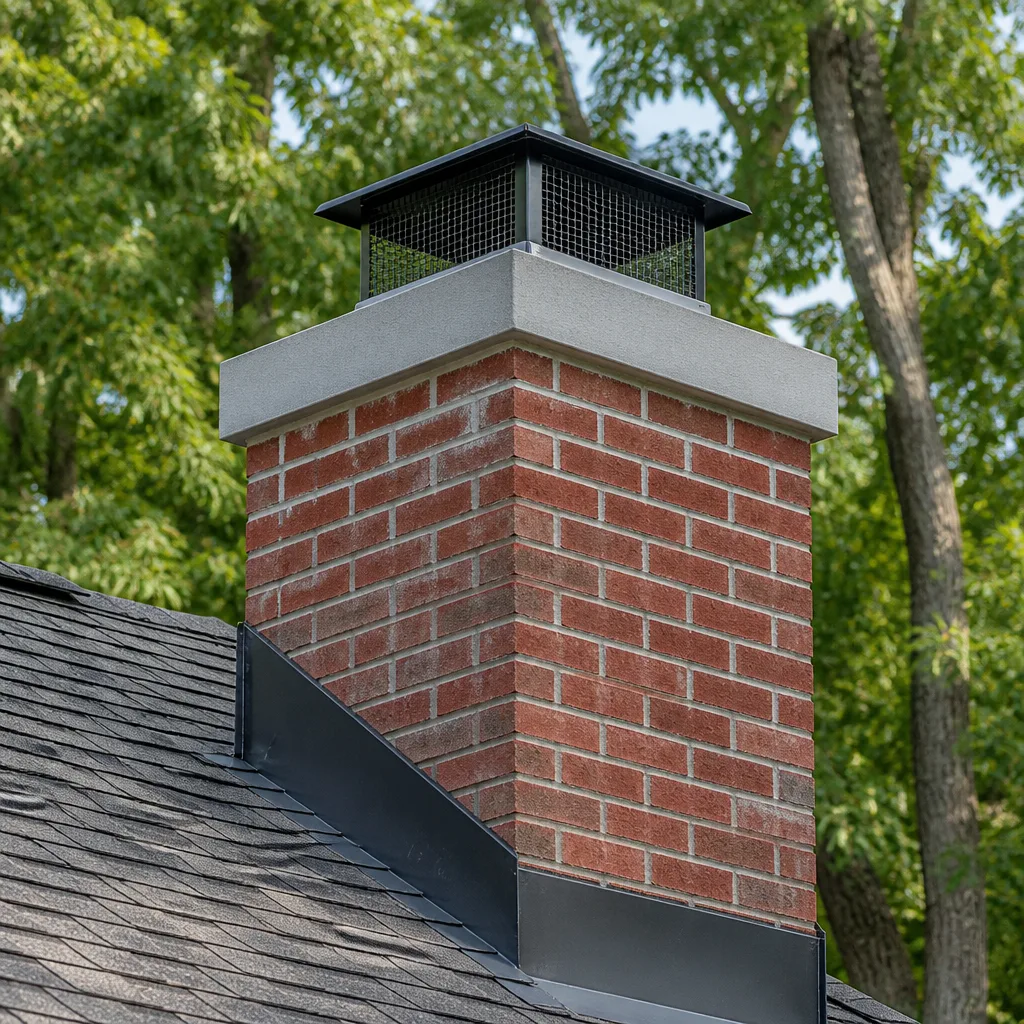 Caps & crowns
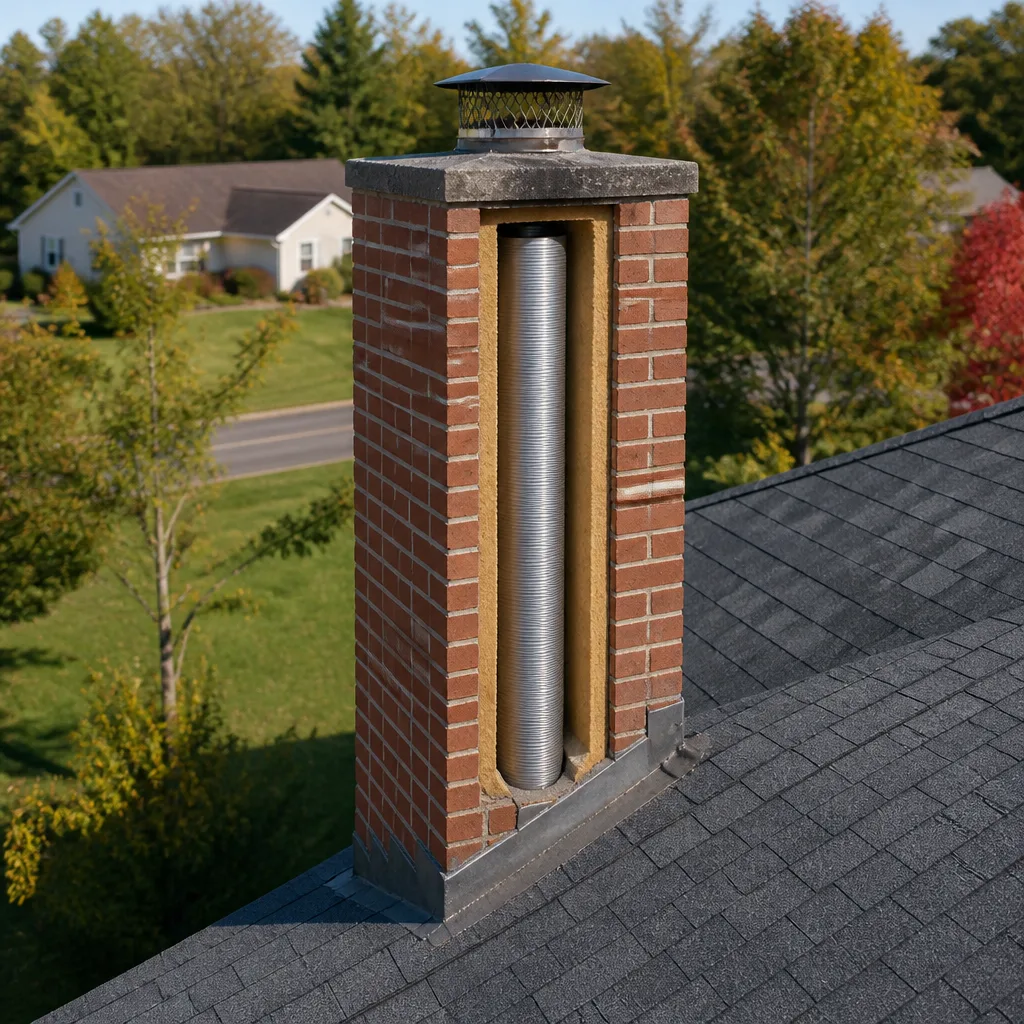 Flue relining
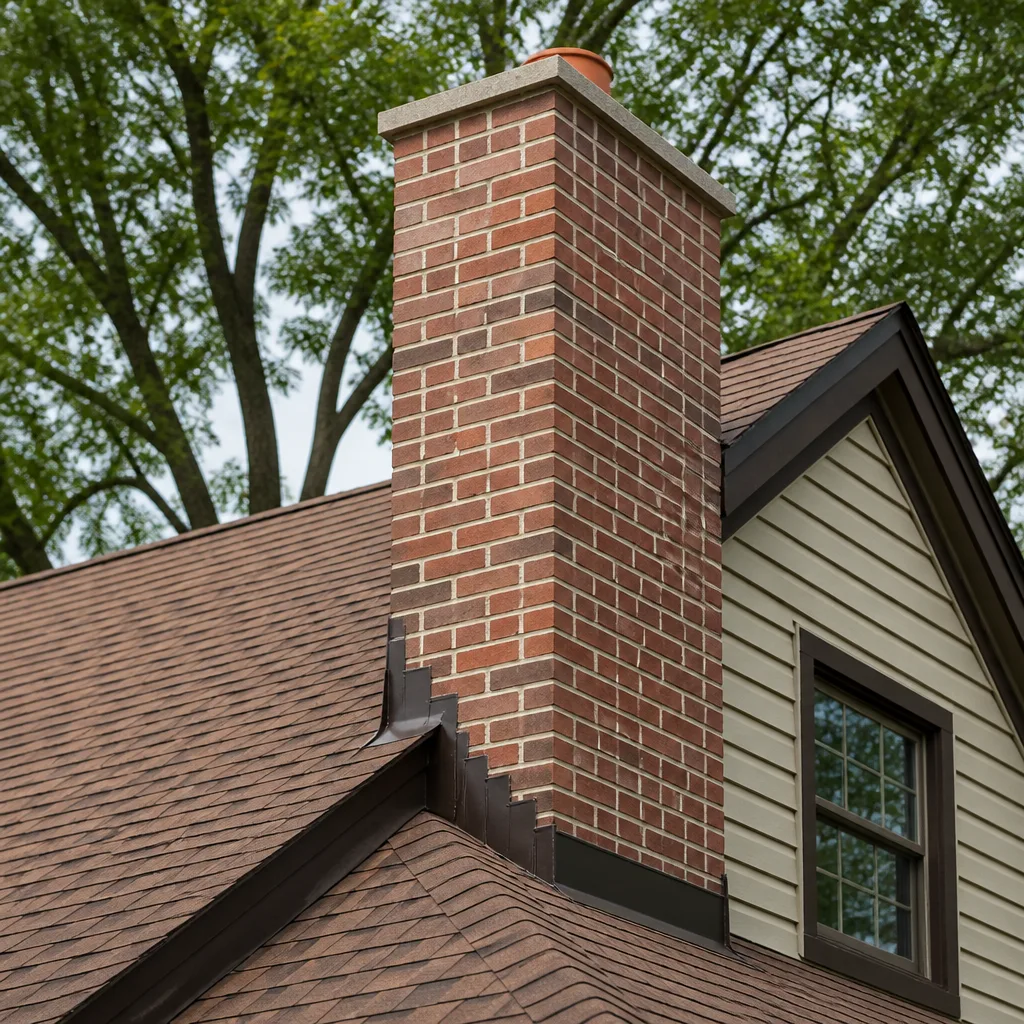 Masonry repair
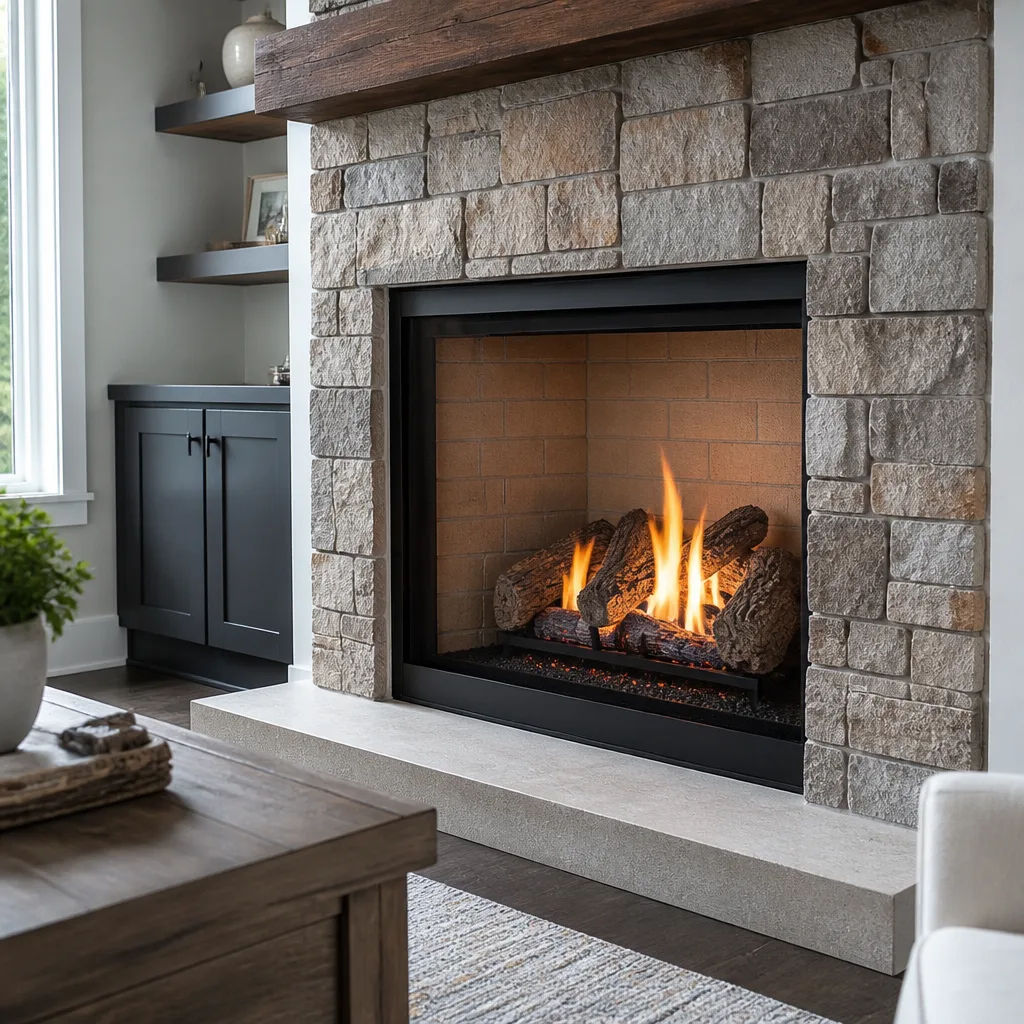 Gas fireplace service
Level 1 sweep and inspection to the NFPA 211 annual standard - flue, crown, cap, and flashing checked and photographed
Chimney sweep logs do not sweep chimneys. They loosen some creosote - which then falls where a brush and vacuum still have to collect it.
Chimney Cleaning Permits, Codes & Inspections in Concord, NC: What You Need to Know
A chimney cleaning never needs a permit. A chimney liner replacement almost certainly does, and many contractors don’t bring it up until you’re already paying for the work. That gap between what homeowners assume and what the code actually requires is where real problems start, especially when a house near Gibson Village or downtown Concord changes hands and a buyer’s inspector starts asking for documentation. This guide walks through the permit picture for chimney work in Concord, NC, what a code-compliant liner installation actually looks like, and how unpermitted work tends to surface at resale. We’ll keep the regulatory side honest and specific, without pretending every sweep needs a filing.
Quick Answer
Cleaning a chimney does not require a permit in Concord or anywhere in Cabarrus County. Repairing or replacing parts of the chimney system, including a flue liner, firebox rebuild, or major venting change, often does require a permit under North Carolina building code, and the only reliable way to confirm is to call the Cabarrus County or City of Concord permitting office directly with the specific scope of work. A code-compliant installation means a listed liner system installed to its manufacturer’s clearances and sized to the appliance. Anything else is worth questioning before you sign.
Styles & brands we work with
- Sweep & inspection
- Caps & crowns
- Flue relining
- Masonry repair
- Gas fireplace service
Table of Contents
- Does chimney cleaning require a permit in Concord, NC?
- When does chimney repair or relining require a permit?
- Where to verify permit requirements in Cabarrus County
- What a code-compliant liner installation looks like
- NFPA 211 and how North Carolina code aligns with it
- What a proper chimney inspection covers
- How unpermitted work surfaces during a home sale
- Why Concord’s climate and housing stock matter here
Does chimney cleaning require a permit in Concord, NC?
No. A routine chimney sweep is maintenance, not construction, and no permit office in Cabarrus County or the City of Concord requires a filing for it. Cleaning removes creosote, soot, and blockages from the flue. Nothing about that work changes the structure of the chimney, alters a listed appliance, or touches the building envelope. It’s the same category as changing your HVAC filter: routine, necessary, and outside the permit system.
What cleaning does do is create the conditions for an inspection to matter. A sweep gets the flue clear enough that a technician can actually see the liner walls. That’s where problems live: cracked clay tiles, gaps at the mortar joints, glazed creosote that has baked into a hard shell, or a liner that was never properly sized for the appliance in the first place. In Concord’s older neighborhoods, where a lot of homes still run original clay-tile flues from decades of wood burning, that inspection step is the one that frequently turns a simple sweep into a conversation about repair.
None of that repair conversation requires a permit until the scope crosses into actual reconstruction. Cleaning alone never does. If you’re being told a permit is required just to sweep a chimney, that’s worth a second phone call. For the plain maintenance side of the work, the Concord Chimney Cleaning team handles the sweep and the inspection on the same visit, so the flue gets cleaned and evaluated in one pass rather than leaving you with a cleaned chimney and no idea what condition it’s in.
When does chimney repair or relining require a permit?
This is the part most homeowners don’t expect. Chimney repairs are not uniformly exempt just because they happen inside a flue. North Carolina building code treats certain chimney work as construction, and construction generally requires a permit. The categories shift depending on scope, so it helps to separate the work into buckets:
- Routine cleaning and inspection: no permit in Concord or anywhere in Cabarrus County.
- Minor repairs to caps, crowns, or flashings: often no permit if the repair matches existing conditions and doesn’t alter the system. Confirm with the permitting office, since the line is not always obvious from the outside.
- Complete flue liner replacement: almost always permitted. This is a structural change to the venting system of a fuel-burning appliance.
- Firebox rebuild or masonry reconstruction: typically permitted, and often inspected.
- Changing the appliance type: if you’re converting from wood to gas or adding a solid-fuel appliance, the venting change frequently triggers permit and inspection requirements.
- Venting components and specialty hardware: the permit question depends on whether the work constitutes a replacement of the listed venting system or a repair of existing components.
In our experience, the confusion comes from contractors who treat every repair as a handshake job. Some of that is scheduling convenience and some of it is a genuine misunderstanding of when a repair crosses into permitted territory. The answer is not to assume either way. It’s to call the permitting office with the specific scope, get a clear yes or no, and put that answer in writing. If a contractor tells you a full liner replacement in Concord needs no permit at all, ask them to explain why, and consider whether that’s the company you want documenting your chimney.
Where to verify permit requirements in Cabarrus County
Concord sits inside Cabarrus County, and permitting jurisdiction depends on where the property is located. Properties within the city limits of Concord generally fall under the City of Concord’s permitting office; properties in unincorporated Cabarrus County fall under the county’s code administration. Some work may involve both if it touches certain electrical or gas components. The reliable move is to call the office that governs your specific address before any repair begins.
Here’s how to verify a permit question in practice:
- Identify whether the property is inside Concord city limits or in unincorporated Cabarrus County.
- Write down the exact scope: sweep only, liner replacement, firebox rebuild, cap replacement, appliance change, or venting work.
- Call the appropriate permitting office and give them the scope and the address. Ask specifically whether the work requires a permit and whether it triggers an inspection.
- Ask what documentation the installer needs to provide, and whether the manufactacturer’s installation instructions are required at inspection.
- Get the answer and the name of the person who answered. Keep it with the paperwork for the job.
The reason this step matters is straightforward: a permit answer you can produce in writing protects you if a future buyer’s inspector raises a question, if your insurer asks about the work, or if a repair turns out to have been done wrong. It’s cheap insurance on the front end and close to impossible to reconstruct after a sale begins. If you’re buying a home in Concord, this is also a reason to ask the seller for any records on prior chimney work before you close.
What a code-compliant liner installation looks like
A compliant liner is not just a tube shoved down a chimney. It’s a listed system, installed to its manufacturer’s instructions, sized to the appliance it serves, and installed with the clearances the listing requires. The “listed” part is the piece most homeowners don’t know to ask about. A listed liner has been tested and certified to a specific standard for a specific application. An unlisted product has not. The two are not interchangeable, and an inspector can tell the difference by looking for the manufacturer’s label, the product identification on the liner itself, and the paperwork the installer should be able to produce.
For flexible liner systems, the installer documentation includes the listing information, the sizing calculation for the appliance, and the clearance requirements to combustibles. Clearance ratings matter enormously in an older Concord home where a chimney may run through a framed chase or sit close to wood framing in the attic. A liner that’s technically the right diameter but installed without verifying clearance to combustibles is not code-compliant, even if it works. That’s the kind of detail that doesn’t show up in a handshake estimate but does show up in an inspection.
We work with DuraFlex flexible liner systems because they come with the documentation and the application flexibility that lets us match the liner to the actual flue configuration, including the offset stacks that are common in Concord homes built in the middle of the last century. We also work with HeatShield for liner restoration where the existing liner can be rehabilitated rather than fully replaced, which is a meaningfully cheaper path when the existing liner qualifies. The question to ask any contractor is simple: what specific product is going into my chimney, and can I see the listing and the installation instructions before the work starts? A contractor who can’t answer that is selling a mystery product, and an inspector will treat it as one.
NFPA 211 and how North Carolina code aligns with it
NFPA 211 is the national standard for chimneys, fireplaces, vents, and solid-fuel-burning appliances. It sets out how chimneys are supposed to be constructed, inspected, maintained, and repaired, and it’s the reference most inspectors and code officials use when they evaluate chimney work. North Carolina building code adopts the national model codes with state amendments, so in practice North Carolina’s chimney requirements run parallel to NFPA 211 rather than replacing it. The specifics can shift with code cycles and local amendments, which is why the permit office in Cabarrus County remains the definitive source for your address.
What NFPA 211 gives you is a framework for asking better questions. It addresses the levels of inspection a chimney can receive, the conditions that require a liner repair versus a replacement, and the clearances that must be maintained. When a contractor tells you the liner needs replacing, the standard is the measuring stick for whether that’s true or whether a restoration option exists. That distinction matters because liner replacement is expensive and restoration is not, and some sweep companies don’t have the equipment or training to offer the second option. A home in Concord with a solidly built but slightly deteriorated clay flue may qualify for restoration, which is why we hold HeatShield capability: it lets us restore liner integrity without a full replacement when the chimney meets the criteria. When it doesn’t, we’ll tell you plainly, and show you the camera footage that explains why.
For the standard itself, the reference you want is NFPA 211. It’s publicly available, and it’s a useful document to skim before a major repair conversation. You don’t need to master it. You just need to know it exists, so that when someone quotes you a liner replacement you can ask what standard governs the decision.
What a proper chimney inspection covers
A chimney inspection is not the same thing as a sweep, and in Concord the two are frequently conflated by low-cost cleaning offers. A sweep cleans. An inspection evaluates. When a company offers a cheap sweep with no inspection attached, you’re getting exactly half the service, and the half that would have told you the chimney needed repair. An inspection without a camera is also only half an inspection.
A proper chimney inspection covers several distinct areas:
- Exterior condition: crown, cap, flashing, chimney masonry or siding, and visible signs of water intrusion.
- Accessible interior: firebox, damper, smoke chamber, and the visible portion of the flue from the firebox up.
- Flue interior by camera: the full run of the liner, checked for cracks, gaps, offsets, and creosote condition that can’t be seen from above or below.
- Appliance connection: how the appliance ties into the venting system, and whether the connection matches the appliance’s requirements.
- Clearances and venting termination: whether the chimney terminates correctly relative to the roof and adjacent construction.
The camera inspection is the piece to insist on. In our experience, a chimney that looks fine from the roof line can have a cracked liner tile two feet above the smoke chamber, and no amount of visual inspection from the top or bottom will catch it. A camera inspection with a photo report gives you evidence you can look at yourself, share with a buyer, and hold onto for the next owner. When a technician recommends liner repair, you should be able to see the footage and understand exactly what they’re pointing at. Nothing should be recommended without it.
How unpermitted work surfaces during a home sale
Unpermitted chimney work is one of those problems that stays quiet until it doesn’t. Then it surfaces, usually during a home inspection, and usually at the worst possible moment in a transaction. The buyer’s inspector pulls the cap, runs a camera, and finds a liner that either wasn’t listed, wasn’t the right size, or was installed without the clearances code requires. Depending on how the sale is structured, that can lead to a repair concession, a delay, or a renegotiation. None of those outcomes are pleasant, and all of them are expensive relative to the cost of doing the work with a permit the first time.
Remediation usually involves one of a few paths:
- Open a permit after the fact, if the permitting office allows it, and have the work inspected and corrected as needed.
- Remove and reinstall the liner system to current code and listing requirements.
- Replace the liner entirely if the existing one can’t be documented or corrected.
- Provide a written disclosure if the buyer’s lender or inspector accepts it and the condition is not a hazard, which is not something to count on.
For anyone selling a home in Concord with a fireplace, the practical advice is to pull the chimney records before the listing goes live. If prior work was permitted, the permit record exists and the inspection documentation may be available. If it wasn’t, you have time to sort it out before a buyer’s inspector does it for you. This is also a reason to ask for permit documentation any time you have chimney repair done on a home you plan to keep. It’s boring paperwork until it isn’t.
Why Concord’s climate and housing stock matter here
Concord sees a real heating season, not a symbolic one. Homes run fireplaces and wood stoves through the cooler months, which means creosote buildup is a real annual concern, not a hypothetical. The area’s humidity in the summer does its own work on masonry and metal. Chimney crowns crack, mortar joints soften, and a slow water intrusion can quietly degrade the top of the flue over a couple of seasons. That’s a maintenance issue rather than a code issue, but it’s a maintenance issue that produces repair work, and repair work is where the permit conversation begins.
The local housing stock adds a layer. A lot of Concord homes, particularly the older ones near downtown and in established neighborhoods like Gibson Village, still have original clay-tile flues. Those flues were built for the appliances of their era, and they don’t always meet the requirements for what a modern homeowner wants to burn. When an old clay flue is evaluated for a wood insert or a newer appliance, the answer is often a reline, and a reline is a permitted scope. Getting that right on the front end, with the right liner system and the right documentation, is far less expensive than correcting it after a sale. We’ve seen both paths, and the front-end path is shorter. If you want to understand how Concord fits into the broader service picture, or what a routine maintenance visit looks like in the local housing stock, the answer tends to be the same: clean it, inspect it with a camera, and document what you find.
Common Mistakes to Avoid
- Assuming cleaning and repair share the same permit rules. They don’t. A sweep never needs a permit, and a liner replacement usually does. Treating them as one category is how homeowners get surprised at resale.
- Taking the contractor’s word on the permit question. Call the Cabarrus County or City of Concord permitting office yourself and give them the specific scope. It’s a five-minute call that can save a five-figure problem.
- Skipping the camera inspection to save on the sweep. A low-cost sweep with no inspection is the most common shortcut in this trade. It leaves you with a clean chimney and no idea what condition it’s in.
- Not asking what product is going into the chimney. A liner is a listed system, not a generic tube. Ask for the product name and the listing before the work begins, and don’t accept a shrug.
- Accepting a repair recommendation without seeing the footage. The single best protection against an unnecessary upsell is your own set of eyes on the camera report. Nothing should be recommended that you can’t see for yourself.
- Selling a Concord home without pulling the chimney records. Buyers’ inspectors are thorough. If a prior repair wasn’t permitted, you want to know that before the inspection does.
- Letting a chimney sit uninspected because it “seems fine.” Chimney problems don’t announce themselves. Creosote buildup and liner cracks are invisible from the room, and by the time they’re obvious, they’re usually expensive.
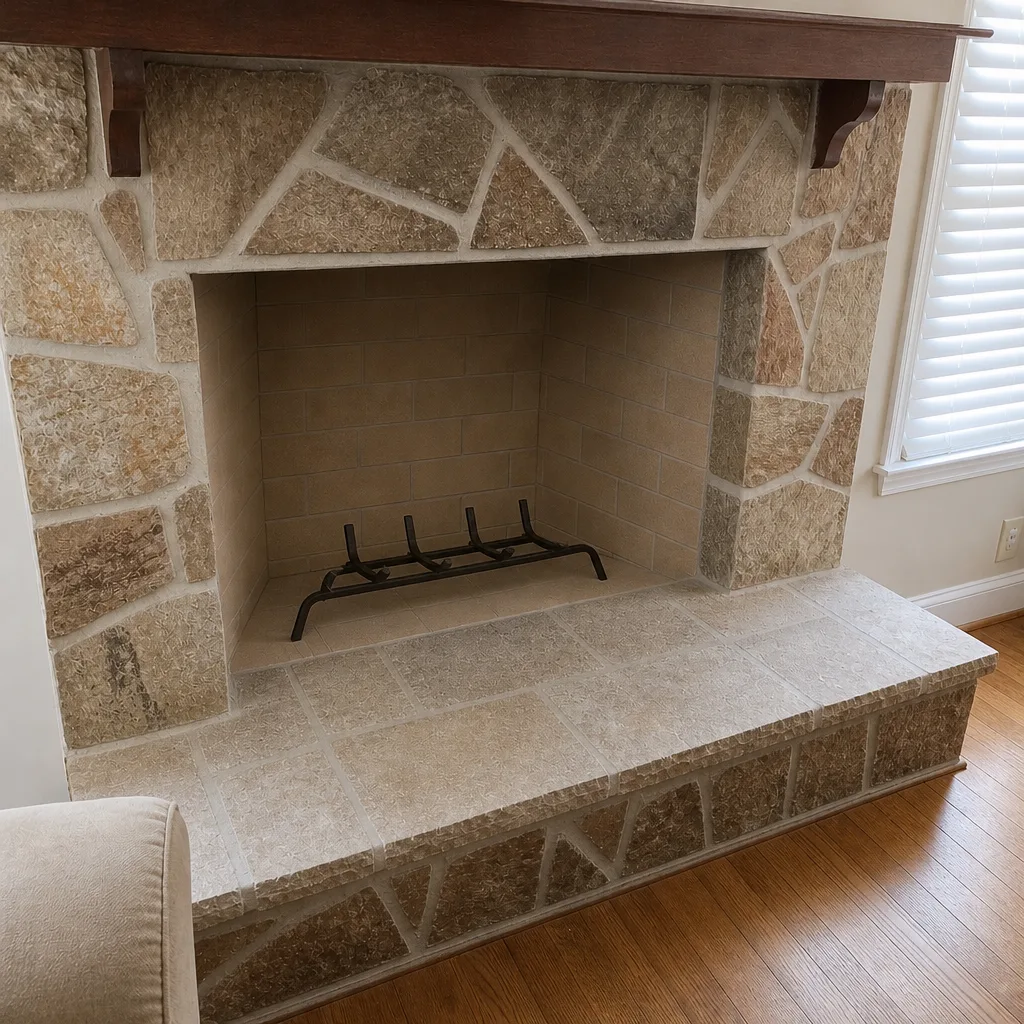
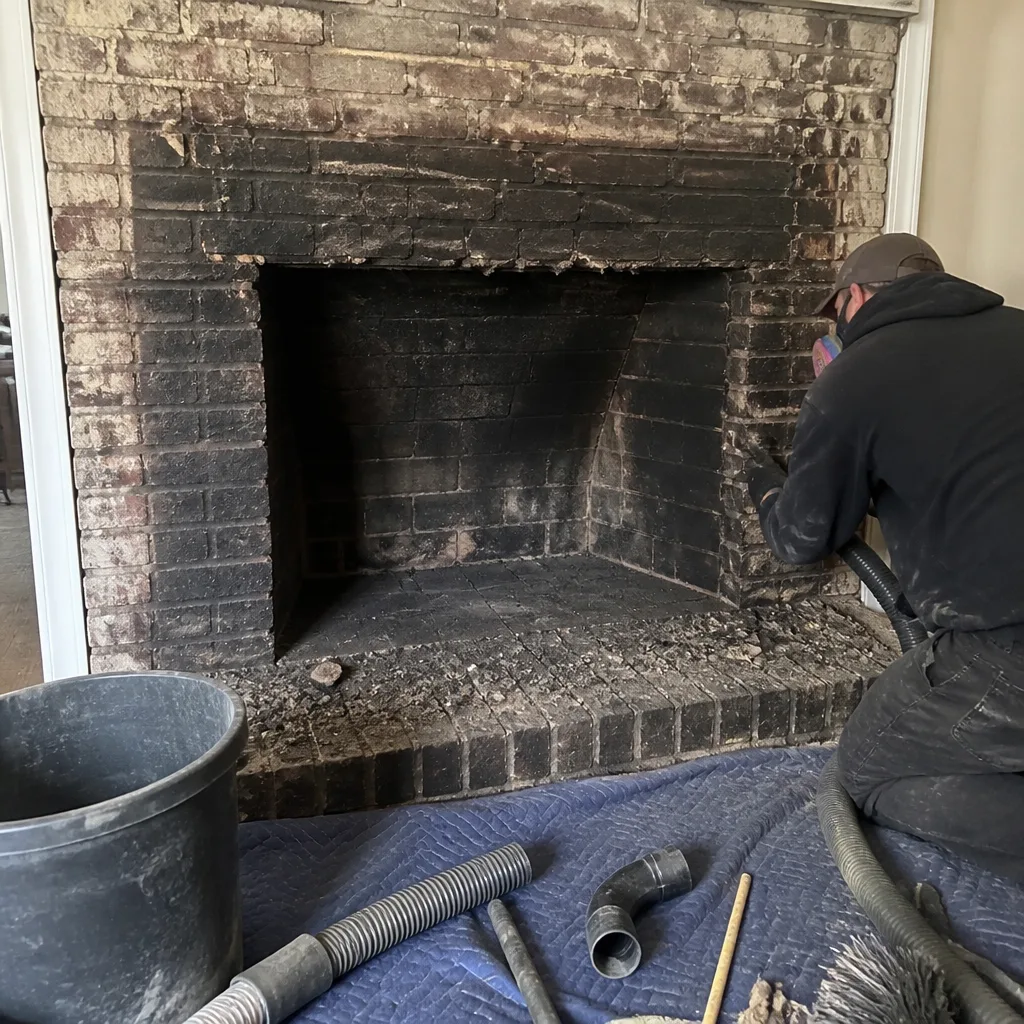
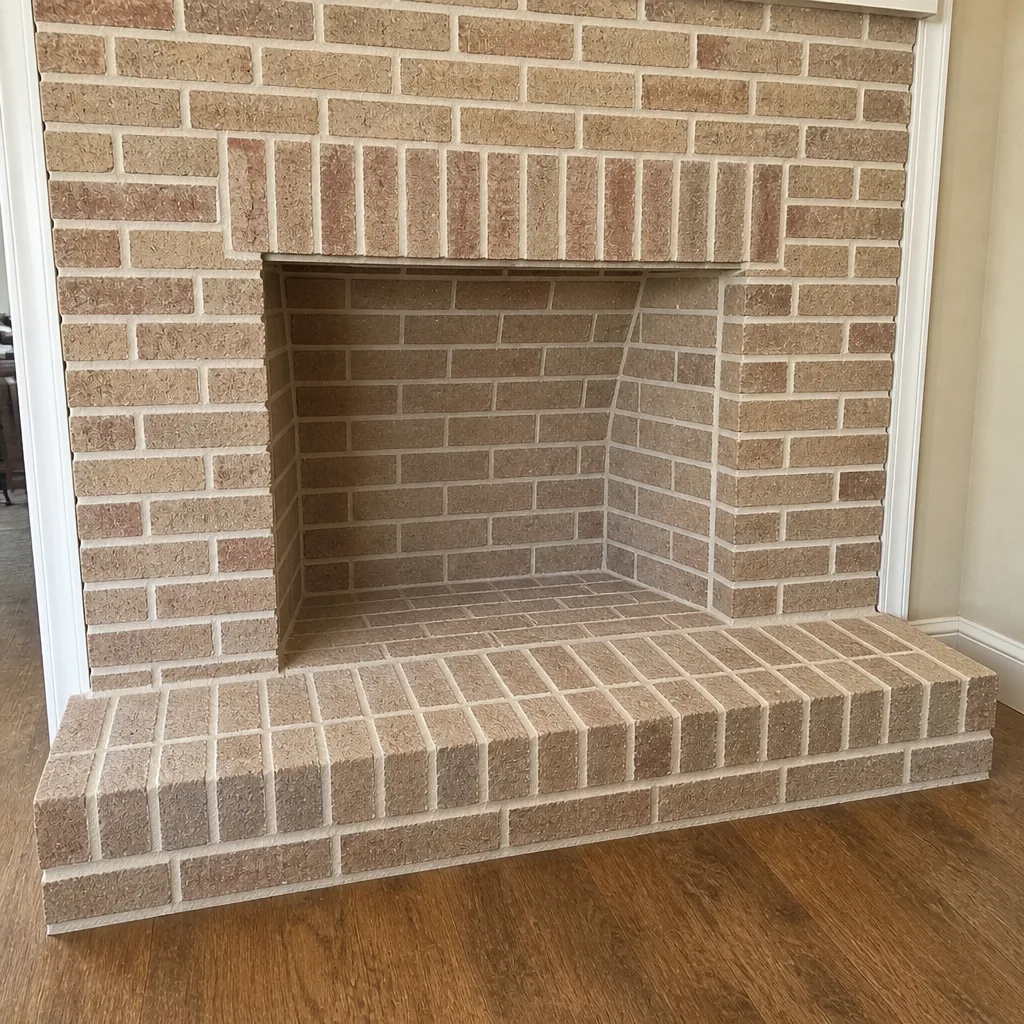
See the difference
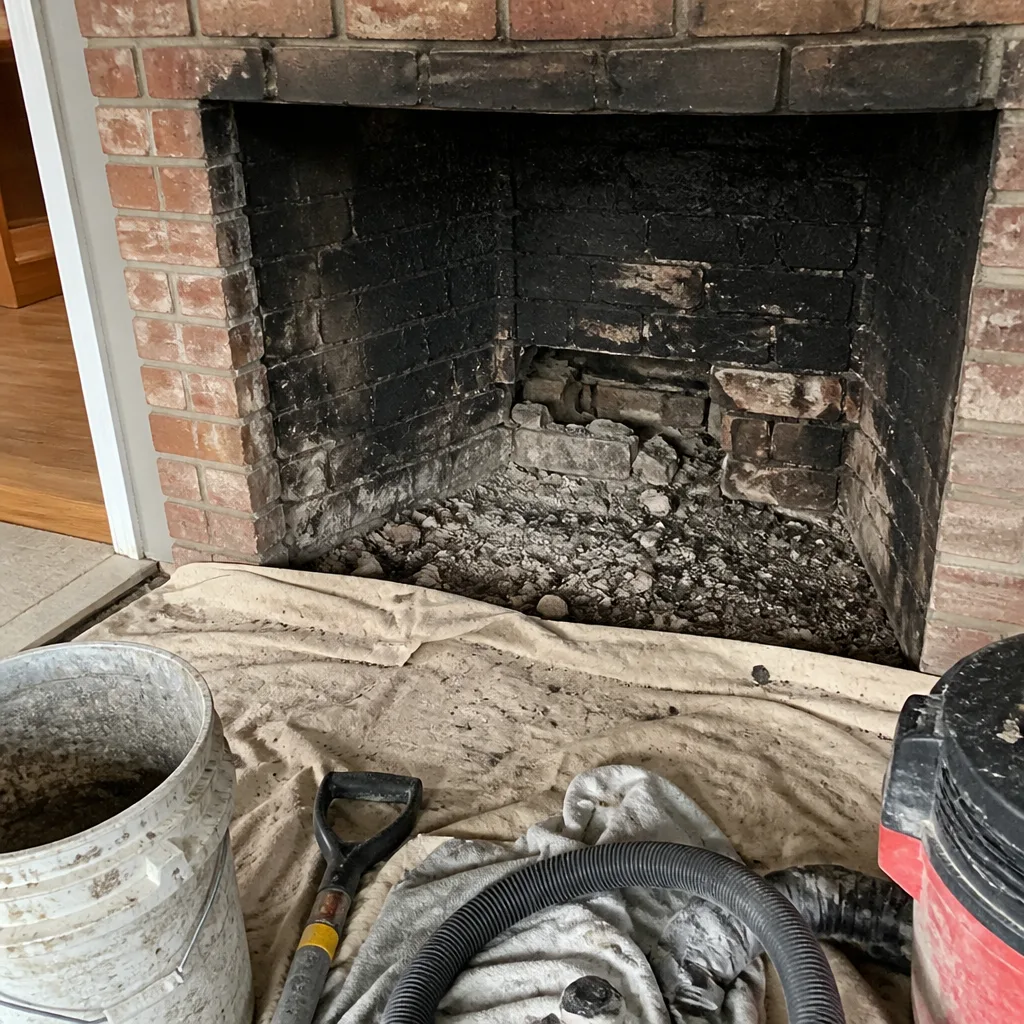 Before
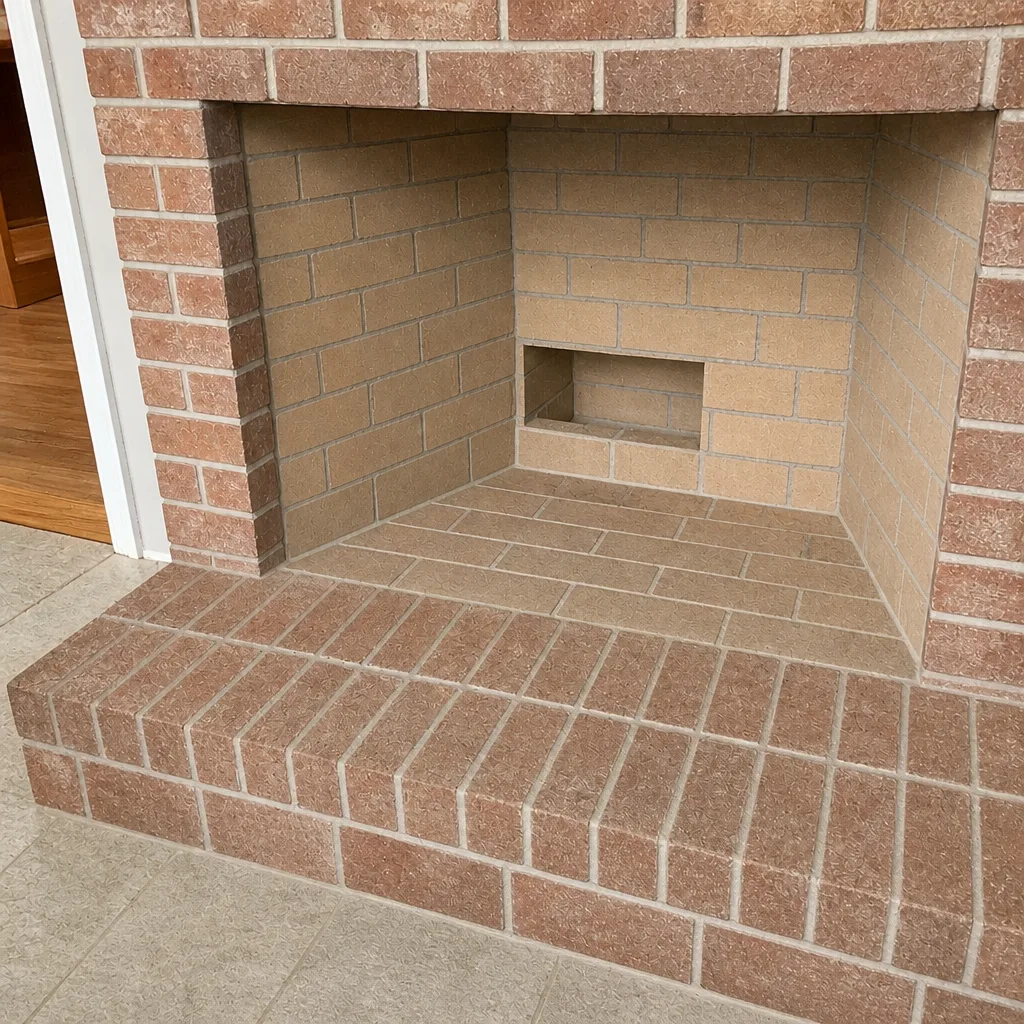 After
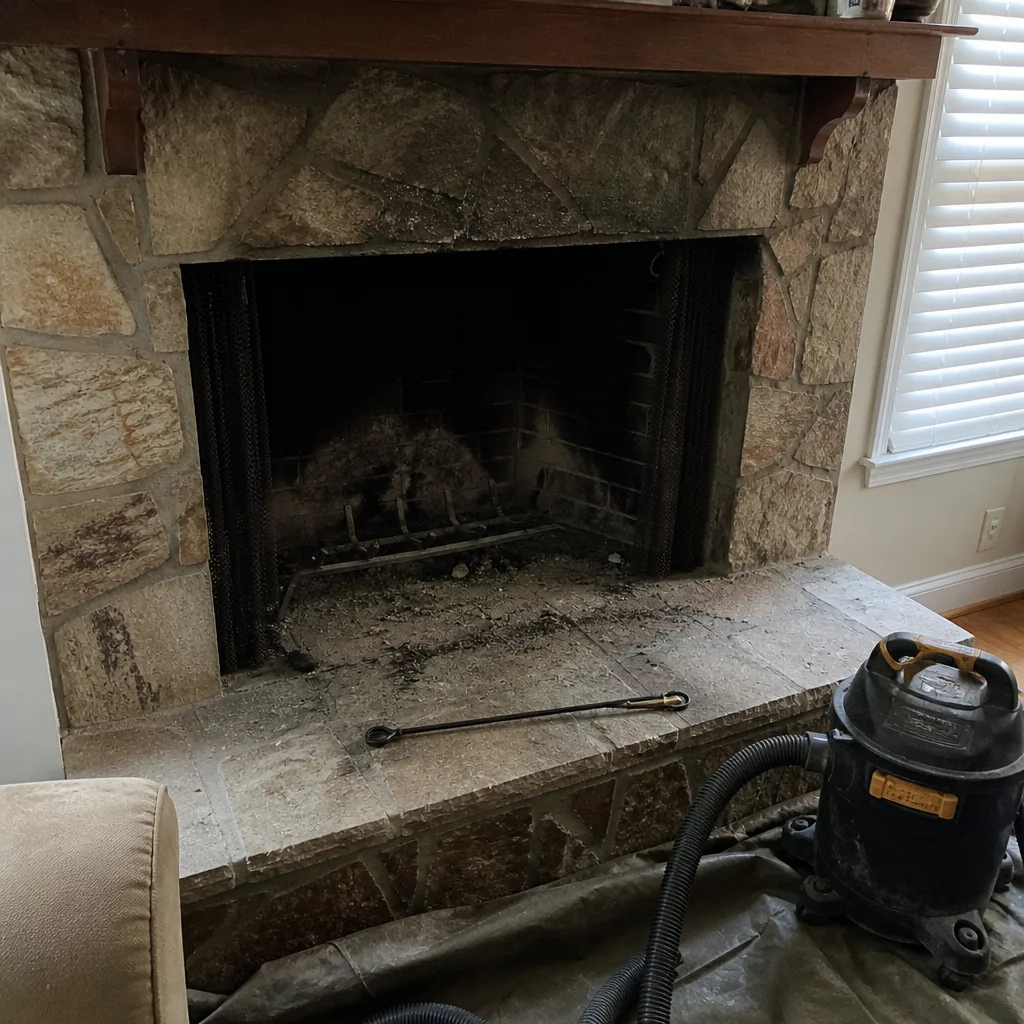 Before
 After
 Before
 After
When to Call a Professional
Call a professional if it’s been more than a season since your last inspection, if you’ve noticed smoke backing into the room, if you smell a strong creosote odor on warm days, or if you’re planning to sell a Concord home with a fireplace. Call if a prior sweep found damage and you were left without a repair plan, which is a common outcome with sweep-only companies. Call if your chimney has an offset flue or a complex configuration, since those need equipment and product lines that a basic sweep operation may not carry. And call if you’re converting appliances or adding a wood insert, because the venting change needs to be evaluated against code before it’s installed, not after. Concord Chimney Cleaning offers free estimates in Concord – call (866) 665-4951. We answer 24/7, and fast dispatch from 7am to 7pm means we can typically get out to take a look at the chimney and tell you honestly what it needs, including whether a permit applies before we begin the repair conversation. The estimate is free, and the price is set per job by the written estimate.
Frequently Asked Questions
No. A chimney cleaning is routine maintenance and does not require a permit in Concord or anywhere in Cabarrus County. Permit requirements only come into play when the work crosses into structural repair or replacement of components like the flue liner or firebox. If you’re being told a permit is required just to sweep a chimney, it’s worth verifying that directly with the permitting office. Call (866) 665-4951 for an exact quote on a sweep and inspection – estimates are free.
Almost always, yes. A complete liner replacement is a structural change to the venting system and is generally treated as permitted construction under North Carolina building code, frequently with an inspection attached. The definitive answer depends on your address and the specific scope, so the reliable move is to call the City of Concord or Cabarrus County permitting office with the details before the work begins. We can walk through what that scope looks like before any work is scheduled. Call (866) 665-4951 to book an inspection – estimates are free.
A code-compliant liner installation means a listed liner system, sized to the appliance, installed to the manufacturer’s instructions, and installed with the clearances to combustibles the listing requires. The “listed” part matters because an unlisted product has not been tested for the application. Ask any contractor what product they’re using and whether you can see the listing documentation before work begins. Nothing is recommended without evidence, and the documentation should be available to you. Call (866) 665-4951 for an exact quote on a liner evaluation – estimates are free.
It can, and it usually surfaces during the buyer’s home inspection. Buyers’ inspectors frequently run a camera down the flue, and an unlisted liner, a wrongly sized liner, or one installed without proper clearance can trigger a repair concession, a delay, or a renegotiation. Prior permits and inspection records are the best protection. If you’re selling a Concord home with a fireplace, pull the chimney records before the listing goes live. Call (866) 665-4951 if you want an inspection and a written report to have on hand – estimates are free.
NFPA 211 is the national standard for chimneys, fireplaces, vents, and solid-fuel appliances, and North Carolina building code runs parallel to it with state amendments. NFPA 211 addresses construction, inspection levels, clearance requirements, and repair criteria. Your local permitting office is the definitive source for how the standard applies to a specific address. If a contractor is recommending liner work, ask what standard governs the recommendation and whether you can see the camera report. Call (866) 665-4951 for a camera inspection – estimates are free.
Annual inspection is the standard recommendation, and it’s especially worth following in Concord, where the heating season is long enough to produce meaningful creosote every year. If you burn often, if the wood isn’t well seasoned, or if the chimney is older with an original clay-tile flue, annual is a minimum, not a stretch. The inspection is also the point at which repair or permit questions get caught early. Call (866) 665-4951 to schedule an inspection – estimates are free.
The Bottom Line
Chimney cleaning is permitted-exempt; chimney repair and relining frequently aren’t. The gap between those two facts is where most of the trouble in Concord begins, whether it shows up when a homeowner is trying to sell or when a contractor is recommending a repair they can’t justify. Call the Cabarrus County or City of Concord permitting office with the specific scope before any repair starts, and get the answer in writing. Insist on a camera inspection, ask what listed product is going into your chimney, and don’t accept a repair recommendation you can’t see the footage behind. The work itself is exactly the kind of job where the paperwork is short and the consequences of skipping it are long.
If you want a sweep, an inspection, and a clear-eyed answer about whether a permit applies, call Concord Chimney Cleaning at (866) 665-4951. We answer 24/7. Fast dispatch from 7am to 7pm, Sunday through Friday. The written estimate sets the final price, and the inspection report is yours to keep.
Written by the team at Concord Chimney Cleaning.